
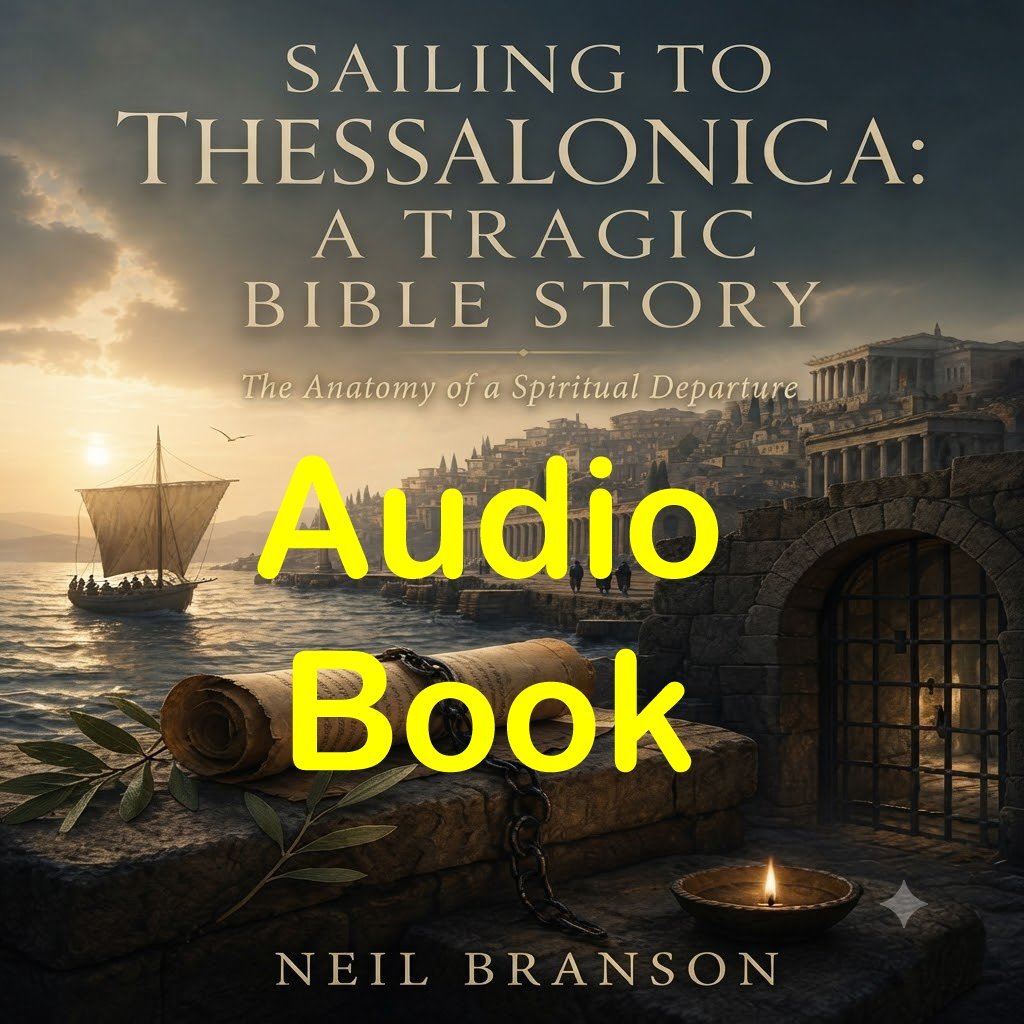
The air in Ephesus was thick—a heavy, intoxicating blend of sea salt, roasting lamb, and the sharp, metallic tang of the harbor. It was a city that never truly slept; it merely changed its rhythm from the frantic industry of the daylight hours to the shimmering, lamp-lit decadence of the night. For a young man like Demas, standing amidst the chaos of the marketplace, the world felt immense, yet curiously hollow.
He was a man of modest means, accustomed to the predictable patterns of trade and the quiet expectations of his kin. His life was measured in bolts of linen and the counting of copper coins. But there was a restlessness in his marrow, a quiet ache that whispered there had to be more to existence than the accumulation of perishable goods. He often found himself watching the travelers who docked at the harbor—men with dust on their sandals and eyes that seemed to look past the horizon, as if they were tracking a star invisible to everyone else.
It was on a Tuesday, beneath the sprawling, shadowed colonnades of the Great Theater, that he first saw him.
The man was not physically imposing. In fact, by the standards of the Roman guards who paced the perimeter, he was unremarkable—stooped, perhaps, with the weariness of a thousand miles etched into the lines of his face. Yet, there was an electricity in his presence. As he spoke, the bustling market seemed to draw in a collective breath. He didn’t shout, yet his voice carried with the precision of a bell struck in a quiet room. He spoke of a Kingdom that did not rely on the favor of Caesar or the stability of marble walls. He spoke of a Love that had pursued him into the darkest corners of his own arrogance.
Demas stood at the edge of the crowd, his heart hammering against his ribs like a trapped bird. He had heard rumors of this "Way," of the followers of the Nazarene who were turning the world upside down. He had expected to see fanatics or wild-eyed agitators. Instead, he saw a man who looked at the broken, the discarded, and the forgotten with a tenderness that bordered on the painful.
That man was Paul.
As the crowd began to disperse, drifting away like leaves caught in a breeze, Demas found himself walking forward, drawn by an invisible tether. He didn't know what he was doing, or what he intended to say. He only knew that the life he had known—the linen, the coins, the safety of his small room—had suddenly lost its color. It looked like a black-and-white sketch compared to the vibrant, terrifying, and beautiful reality Paul seemed to inhabit.
"You look like a man who is searching for a map," a voice said.
Demas startled. Paul was standing just a few feet away, leaning on a wooden staff. His eyes, though aged, were startlingly bright. There was no judgment in them, only a profound, patient curiosity.
"I am just... watching," Demas replied, his voice sounding thin in his own ears.
"Watching is the first step toward walking," Paul said with a faint, knowing smile. "But be warned: the road I walk is not paved with ease. It is a road of sacrifice. It is a road that demands everything, not because it is cruel, but because it is the only way to hold onto what is truly eternal."
In that moment, Demas felt a shift in the tectonic plates of his soul. It was the call of the road—that ancient, seductive summons that pulls a man out of the shallow harbor of his own comfort and into the deep, turbulent waters of a divine mission. He looked at his hands, calloused from the mundane labor of his trade, and realized he wanted them to hold something heavier, something more significant.
"I have nothing to offer," Demas whispered, a truth that felt both like a confession and a plea.
"That is exactly the requirement," Paul replied softly. "Those who come with full hands have no room to receive the grace that sustains this journey."
That evening, Demas walked back to his quarters, but the streets felt different. The familiar sights of Ephesus—the statues of Artemis, the wealthy merchants in their silks, the soldiers with their clanking armor—seemed to belong to another lifetime. He looked at his meager belongings, his small bed, his simple tools, and felt a sudden, sharp clarity. He was not meant to spend his years here, watching the world drift by from the safety of the shore.
He realized that faith is not a state of being, but a state of movement. It is the willingness to leave the known for the unknown, to trade the certainty of the present for the promise of the future. He was young, his resolve was untested, and his understanding of the cost was still shrouded in the idealism of a novice. He didn’t know then that the road would lead to shadows, to hunger, to the cold stone of prison floors, and to the agonizing pull of a life left behind. He only knew the magnetic attraction of a purpose larger than himself.
He spent the night in a fever of anticipation. He thought of the stories he had heard—of miraculous recoveries, of debates in the synagogues, of the way these people stood against the might of the Empire with nothing but words and conviction. He felt a surge of zeal, a heat in his chest that promised he would never grow cold, never grow tired, never falter.
He was a traveler who had just discovered the destination, unaware that the beauty of the journey would be found not in the arrival, but in the endurance.
When the sun rose over the Aegean, turning the water into a sheet of hammered gold, Demas did not go to the marketplace. He did not check his inventory. He packed a small satchel—a few loaves of bread, a change of tunic, and a heart that was still beating with the rhythm of the call.
He found Paul and his companions near the city gates, preparing to head toward the province of Asia. When Paul saw him approaching, he didn't offer a grand welcome. He simply nodded, a gesture of quiet, warm acknowledgment, as if he had been expecting him all along.
"Ready?" Paul asked.
"I think so," Demas said.
"The road will teach you the rest," Paul replied, turning toward the path.
No reviews found!


No comments found for this product. Be the first to comment!