
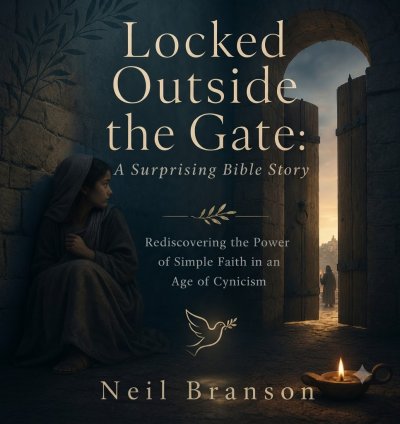
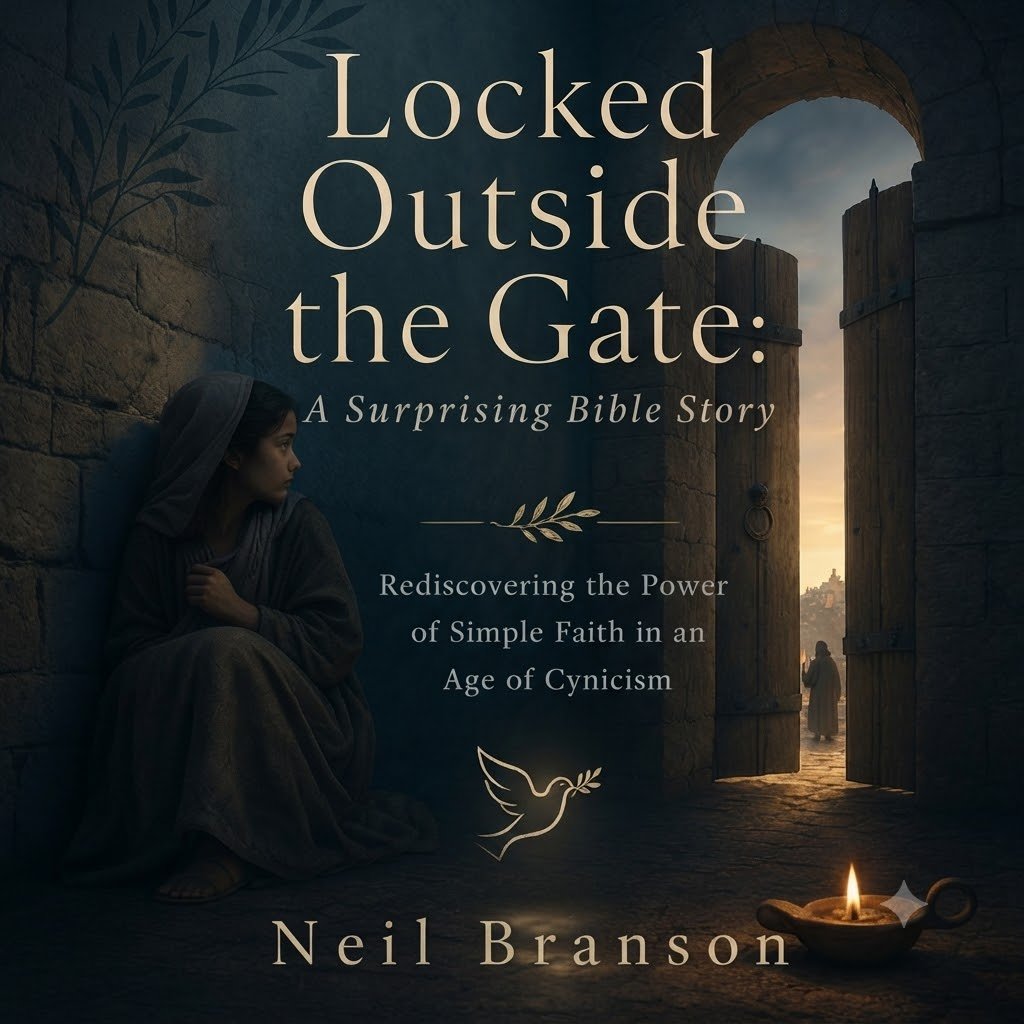
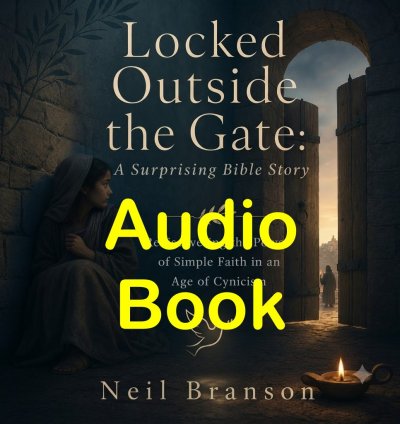
Locked Outside the Gate: A Surprising Bible Story
The Girl in the Shadows.
The Jerusalem sun did not kiss the city in the early days of the apostles; it scorched it. It was a heat that settled into the porous limestone of the walls, a dry, dusty reminder that the world outside was as unyielding as the earth beneath their feet. Inside the home of Mary, the mother of John Mark, the air was cooler, though it carried a weight of its own—a heavy, unspoken tension that seemed to cling to the tapestries and the worn wooden beams of the ceiling.
In the midst of this atmosphere lived Rhoda.
To the casual observer—the Roman guard patrolling the nearby street or the merchant haggling over prices in the marketplace—Rhoda was invisible. She was a servant, a girl whose life was measured in the rhythmic sweep of a broom, the steady pouring of water from clay jars, and the quiet clearing of dishes after the evening meal. Her existence was defined by the periphery. She moved through the rooms of Mary’s house like a shadow, light-footed and observant, her presence so constant and unassuming that she was often forgotten by those who gathered there.
But there is a peculiar grace afforded to those who live in the shadows. When you are overlooked, you have the rare privilege of seeing what others are too busy or too important to notice.
Rhoda spent her days watching the giants of the faith. She saw the way Peter’s brow furrowed when he spoke of the Kingdom, his hands calloused and shaking slightly as he recounted the stories of the Nazarene. She watched John, his eyes often fixed on some distant horizon, his voice hushed as he debated the nuances of the Law with the elders. She saw the sweat on their brows and the weariness in their posture. She heard the hushed tones of their discussions, the frantic scratching of pens on parchment, and the heavy, collective sighs that followed news of another arrest or another threat from the Sanhedrin.
She was, by all accounts, a nobody. She possessed no theological training, no seat at the table where the decisions were made, and no voice that was sought after during the late-night strategy sessions. Yet, Rhoda possessed something that many of the learned men in that room had begun to lose: a heart that had not yet learned how to barricade itself against wonder.
While the elders debated the sovereignty of God and the logistics of survival, Rhoda was busy polishing the silver and listening. She didn’t just hear their words; she felt the spirit behind them. She felt the fear that vibrated in the room like a plucked harp string. She noticed how the prayers often sounded like pleas for safety, wrapped in the language of duty. They prayed for the church, they prayed for the mission, and they prayed for Peter—but their prayers felt like stones tossed into a deep, dark well. They were waiting for the splash, but they didn’t truly expect to see the water rise.
One evening, as the shadows lengthened and the oil lamps began to flicker, Rhoda found herself lingering near the doorway of the inner chamber. The men were arguing again. It was a cycle she had witnessed many times—a cycle of intellectualizing the impossible. They were dissecting the current persecution, analyzing the political climate of Herod’s court, and calculating the odds of Peter’s survival.
"If the guards are doubled," one elder remarked, his voice tight with clinical precision, "the logistics of an escape are—humanly speaking—non-existent."
"We must pray for his endurance," another replied, his tone weary. "If he is to die, let him be a witness to the end." ... MORE

No comments found for this product. Be the first to comment!