
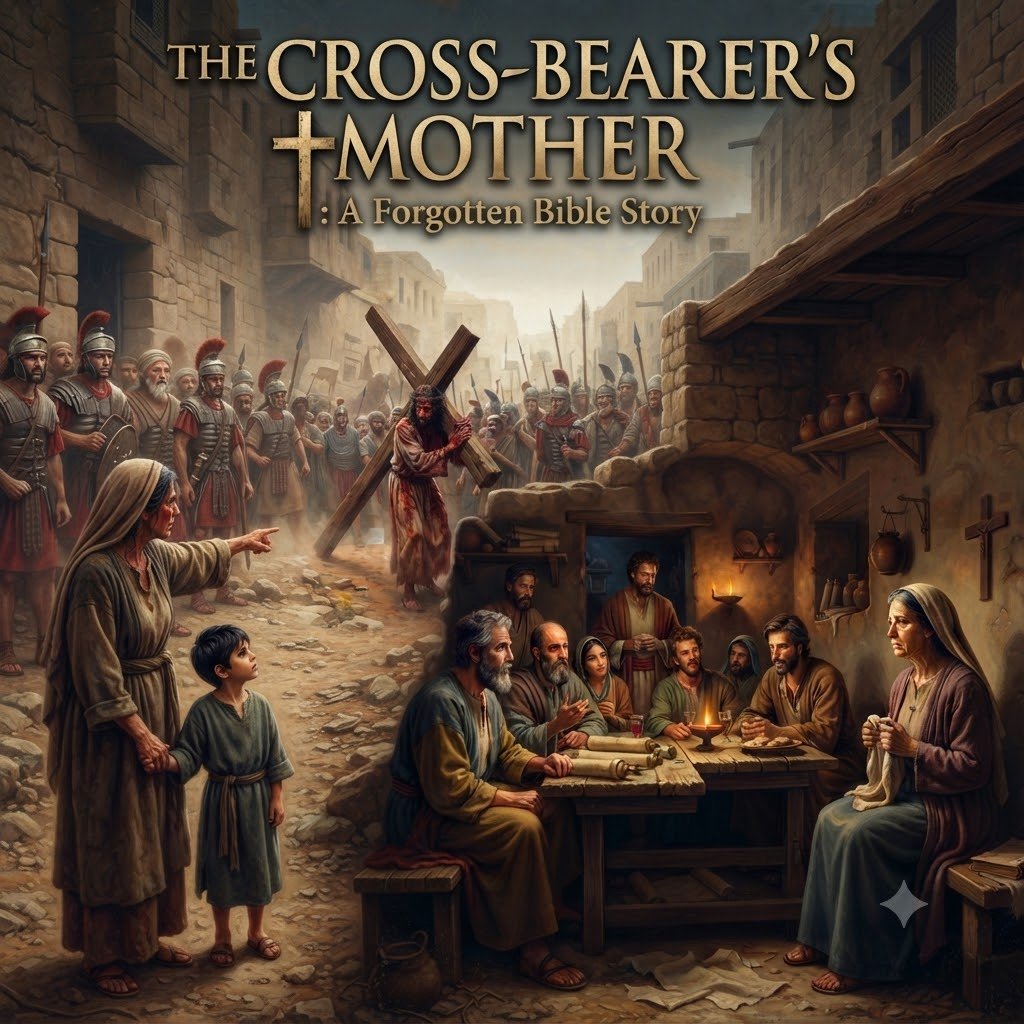
The morning air in Jerusalem during the Passover season does not merely hang; it presses. It is a thick, dry heat laden with the scent of roasting lamb, the sharp tang of sweat from thousands of pilgrims, and the metallic, underlying bitterness of Roman iron.
I stood in the doorway of our small, rented dwelling on the outskirts of the city, wiping the fine, chalky dust from my hands onto my apron. It was a futile gesture. In this land, the dust of the road is not merely earth; it is a memory. It settles into the creases of your skin, the fibers of your tunic, and the very corners of your soul. It is the dust of exile, the dust of occupation, and, for a mother watching her son navigate a world that is not his own, it is the dust of uncertainty.
My son, Simon, had traveled a long road to be here. We were Cyrenians—men and women of the North African coast, a place of vibrant marketplaces, Greek philosophies, and the salt-spray of the Mediterranean. We were Jews, yes, but we were Jews who carried the cosmopolitan rhythm of the Diaspora in our veins. When Simon spoke of Jerusalem, his eyes always held a shimmering, reverent light. He dreamed of the Temple, of the holy sacrifices, of being counted among the faithful who ascended the hill to witness the glory of the Almighty.
But the Jerusalem he found was not the Jerusalem of the prophets. It was a city held in the iron grip of a Governor who viewed our faith as a nuisance and our people as subjects to be managed, taxed, and intimidated.
"Mother," he had said just the evening before, his voice low and steady, "the city is restless. There is a tension in the markets that I have never felt before. The Roman guards are everywhere, their hands hovering near their hilts as if they expect the very stones to rise up against them." ... <ORE
No reviews found!

No comments found for this product. Be the first to comment!